Phone Diagnosis
Learn how to approach a phone problem by examining symptoms and considering possible causes before repair.
Become Doctor Phones Now is a practical mobile phone repair book containing knowledge designed to help technicians develop a deeper understanding of phone diagnosis, troubleshooting, electronic components and repair.
The book is created for people who want to move beyond simply replacing damaged spare parts and develop the technical thinking needed to investigate phone problems systematically.
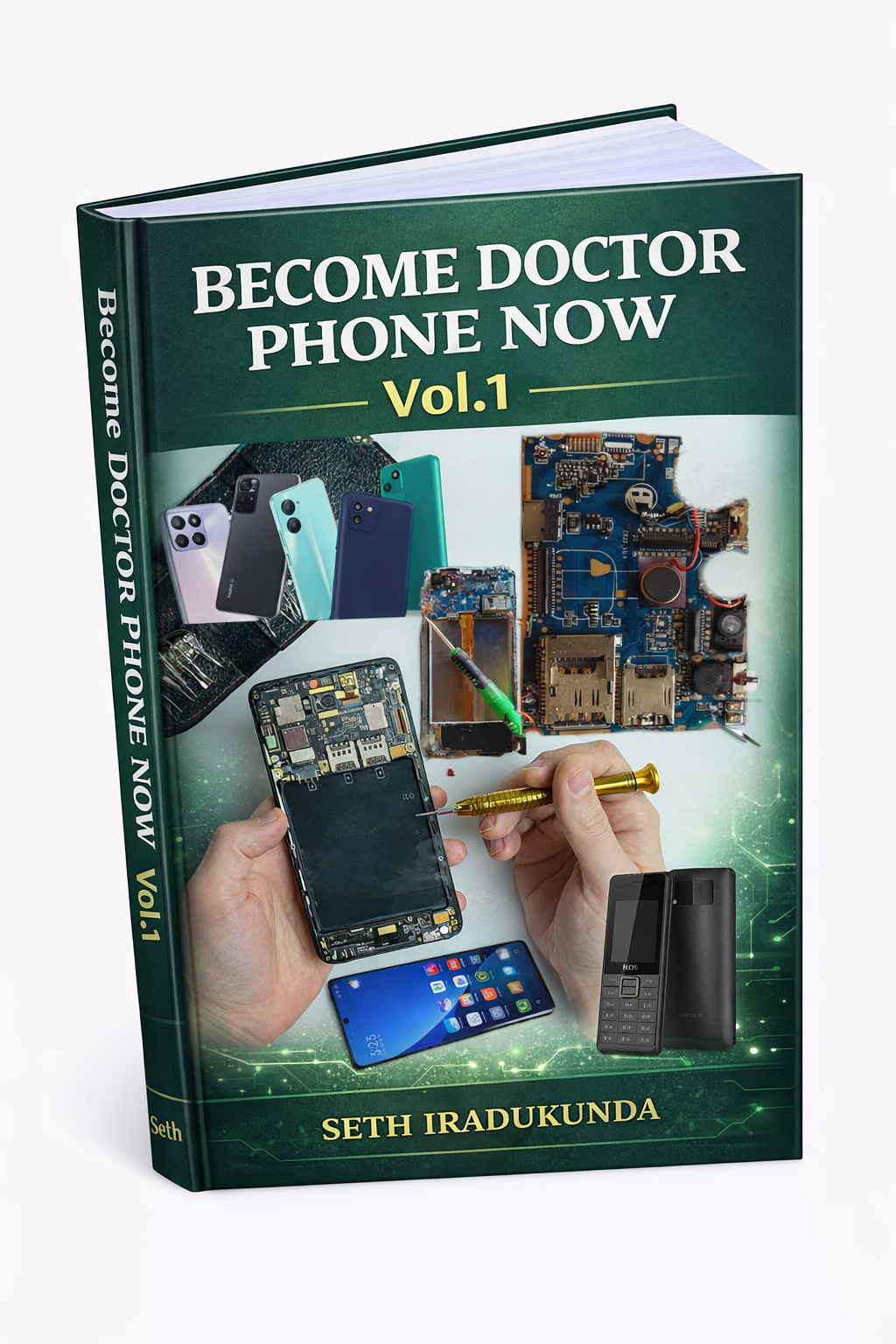
Build the knowledge needed to understand and troubleshoot mobile phone problems.
Become Doctor Phones Now is a book designed for people who want to develop practical knowledge in mobile phone repair. The central idea behind the book is to give technicians enough useful technical knowledge to understand the phone they are repairing instead of relying only on trial and error.
A professional phone technician needs to understand much more than the external appearance of a device. Inside every phone are numerous electronic components, circuits, connectors, modules and mechanical parts that work together to provide the functions users expect.
When a phone stops working correctly, the visible symptom does not always identify the actual cause. A phone that does not turn on may have a problem related to power, charging, a component, a connection, a board-level fault or another part of the system. Developing diagnostic knowledge helps the technician investigate these possibilities in a logical manner.
This is why Become Doctor Phones Now focuses on building broad repair knowledge. The goal is to help learners understand how technicians think about faults, how components relate to symptoms and how repair decisions can be made using technical information and appropriate testing methods.
Replacing a screen, battery, charging port or other spare part can solve some phone problems, but professional repair requires a wider understanding. Some faults cannot be solved simply by replacing the most obvious part.
A technician who understands components and circuits can approach a repair differently. Instead of changing multiple parts without knowing the cause, the technician can begin by examining the symptoms, identifying the relevant section of the phone and determining what should be investigated.
This type of technical thinking is important for technicians working with both common smartphone problems and more complicated electronic faults.
The book provides a broad foundation that can support your development as a mobile phone repair technician.
Learn how to approach a phone problem by examining symptoms and considering possible causes before repair.
Develop knowledge about electronic components and their importance in mobile phone circuits.
Understand the different sections of a modern mobile phone and how they contribute to device operation.
Learn why appropriate testing and measurement are important when investigating electronic faults.
Develop the ability to recognize signs that may indicate a damaged component or circuit.
Build a more systematic approach to repairing mobile phones and investigating faults.
Understanding different areas of a mobile phone allows a technician to approach faults more effectively.
Understand the importance of power-related sections and symptoms.
Learn about charging-related components, connections and faults.
Understand components involved in sound, microphones and speakers.
Learn about smartphone camera systems and related troubleshooting.
Understand display-related parts and common symptoms.
Study the importance of communication-related phone circuits and components.
Understand the role of memory and storage in smartphone operation.
Develop an understanding of the motherboard as the central electronic platform.
Understand microphone functions and possible audio-related faults.
Learn why electrical and physical connections are important in mobile repair.
Understand the role of sensors in modern smartphones.
Develop familiarity with components used in mobile electronic circuits.
Phone diagnosis is one of the most important skills for a mobile repair technician. Before a repair can be performed correctly, the technician needs to understand what the device is doing and what it is failing to do.
A phone may show several symptoms at the same time. For example, a device may have a charging problem, unusual power behavior or failure to start. These symptoms can have different causes, and a technician should avoid assuming that the first visible problem is automatically the root cause.
Good troubleshooting begins with observation. The technician should gather information about the phone, its history, the reported fault and the circumstances in which the problem occurs. Physical inspection can also reveal signs such as damage, corrosion, broken connectors or other abnormalities.
After the initial inspection, the technician can use appropriate diagnostic methods to investigate the suspected area. This is where knowledge of electronic components becomes especially useful.
Every electronic component has a purpose. When a technician understands that purpose, it becomes easier to understand why a particular component may be associated with a specific symptom.
Components may be involved in power management, signal processing, charging, audio, communication, protection and many other functions. A technician who understands these relationships has a stronger foundation for troubleshooting.
This does not mean that every fault can be identified immediately. Professional repair often requires careful testing, technical references, diagrams and practical experience. The purpose of the book is to strengthen the knowledge that supports this process.
One of the challenges faced by new repair technicians is the temptation to replace parts without first identifying the actual problem. Although replacement can sometimes solve a fault, repeated trial and error can waste time and may introduce additional problems.
A systematic technician instead asks questions: What is the symptom? Which function is affected? Which components are associated with that function? What evidence can be collected? What should be tested? What result would support or reject a possible cause?
Developing this style of thinking is valuable for anyone who wants to progress from basic phone repair toward more advanced troubleshooting.
The following approach can help technicians organize their troubleshooting process.
Identify the manufacturer, model and relevant device information before detailed diagnosis.
Carefully determine what the phone is doing and what function is not working correctly.
Inspect the device and investigate components and circuits associated with the reported problem.
Apply an appropriate repair and verify that the affected function operates correctly.
Becoming a capable phone repair technician is a learning process. It involves studying electronic components, understanding phone architecture, practicing safe testing methods and gaining experience with different device models.
A beginner may initially focus on simple repairs such as replacing a damaged screen, battery or connector. As knowledge increases, the technician can begin studying the electronic side of mobile phones and learning how individual components affect the operation of the device.
The book is intended to support this development by providing broad technical knowledge about mobile phone repair. It can be used as a reference while studying different repair problems and developing practical experience.
Modern smartphones are complex electronic devices. Their internal architecture varies between manufacturers and models. For that reason, a good technician needs adaptable knowledge rather than depending on a single repair method.
A smartphone problem is often easier to investigate when the technician understands which parts are responsible for the affected function.
If the problem involves audio, the technician can think about the audio-related components and connections. If the phone has a charging problem, charging-related components and connections become relevant areas of investigation. If the device has a display problem, the technician can consider the display system and associated connections.
This type of reasoning helps organize troubleshooting. It does not replace proper testing or technical documentation, but it gives the technician a logical starting point.
Not every smartphone is designed in the same way. Manufacturers use different boards, components, layouts and technologies. Even phones that appear similar externally may have significant differences internally.
Therefore, professional technicians should learn to identify the specific device before applying a repair procedure. Component compatibility should also be considered carefully because similar-looking parts are not necessarily electrically or physically identical.
Learning these principles helps technicians become more careful and more effective when working with unfamiliar devices.
The book can be useful to beginners, students and working technicians who want to strengthen their technical knowledge.
Understand the basic principles of mobile phone repair and troubleshooting.
Identify important smartphone and mobile phone components.
Understand how components contribute to different phone functions.
Develop a more systematic approach to diagnosing phone faults.
Recognize why different symptoms can require different diagnostic approaches.
Understand why smartphone manufacturers use different designs and components.
Build a foundation for advanced motherboard troubleshooting.
Continue developing practical skills through hands-on repair experience.
Become Doctor Phones Now is a mobile phone repair book designed to help learners and technicians develop knowledge about phone diagnosis, components, troubleshooting and repair.
The book is suitable for beginners, mobile phone repair students, electronics learners, working phone technicians and people who want to develop their understanding of mobile phone repair.
Diagnosis helps a technician understand the actual problem before attempting a repair. It can reduce unnecessary parts replacement and encourage a more systematic approach to troubleshooting.
Yes. Understanding electronic components is an important part of developing mobile phone repair knowledge because components are responsible for many of the functions performed by a phone.
Yes. Beginners can use the book as a foundation for learning mobile phone repair concepts and developing the terminology and technical thinking needed for further study.
Yes. Experienced technicians can use technical books as reference material and as a way to review or strengthen knowledge about components, troubleshooting and repair principles.
No. Smartphone manufacturers and models can have different board layouts, components, specifications and repair procedures. A technician should identify the specific device before applying a repair method.
Mobile phone repair is a practical technical field that combines electronics knowledge, observation, testing, problem solving and hands-on experience. A technician may work with many different brands and models, so continuous learning is an important part of professional development.
Become Doctor Phones Now is intended to support that learning process by bringing together important repair concepts in one educational resource. The book can help learners understand the terminology used by technicians and develop a stronger foundation before moving into more advanced repair procedures.
Understanding a phone's internal components is particularly important when a repair moves beyond simple spare-part replacement. Motherboard-level problems require the technician to think about electrical paths, components, connections and the relationship between different sections of the device.
A technician should also understand that symptoms are clues rather than automatic answers. A particular symptom can have more than one possible cause. Proper diagnosis therefore requires observation and appropriate testing instead of assumptions.
With study and practice, learners can become more comfortable identifying components, understanding their functions and investigating faults. Practical experience then helps transform theoretical knowledge into useful repair skills.
The goal of this book is therefore not simply to teach someone how to change a part. It is to encourage a deeper understanding of mobile phone repair and help technicians develop the mindset required to approach difficult problems.
Whether you are starting your journey as a mobile phone technician or already have experience repairing phones, continuing to study components, circuits, testing methods and troubleshooting principles can help you improve over time.
Explore Become Doctor Phones Now and continue building the technical knowledge needed to understand mobile phone components, diagnose faults and approach repairs more systematically.
📚 Explore IGT Tech College Books